01
Rare-event sampling
Adaptive simulation strategies for efficiently discovering infrequent molecular transitions.
Research overview
I use representation learning and statistical mechanics to construct data-driven collective variables and to map complex free-energy landscapes, and I build open-source scientific software that makes these methods accessible for molecular dynamics and materials-simulation workflows.
Research
My research develops and applies machine-learning-guided methods for sampling and characterising rare events in molecular systems, with emphasis on adaptive and weighted-ensemble sampling strategies for transition-path discovery and pathway-resolved kinetics.
Adaptive simulation strategies for efficiently discovering infrequent molecular transitions.
Pathway discovery, pathway-resolved analysis, weighted-ensemble simulations, fluxes, MFPTs, and kinetic observables.
Autoencoders, variational autoencoders, learned collective variables, dimensionality reduction, and data-driven descriptors.
Applications spanning proteins, molecular recognition, phase transitions, molecular materials, solvation, and related problems.
Featured research
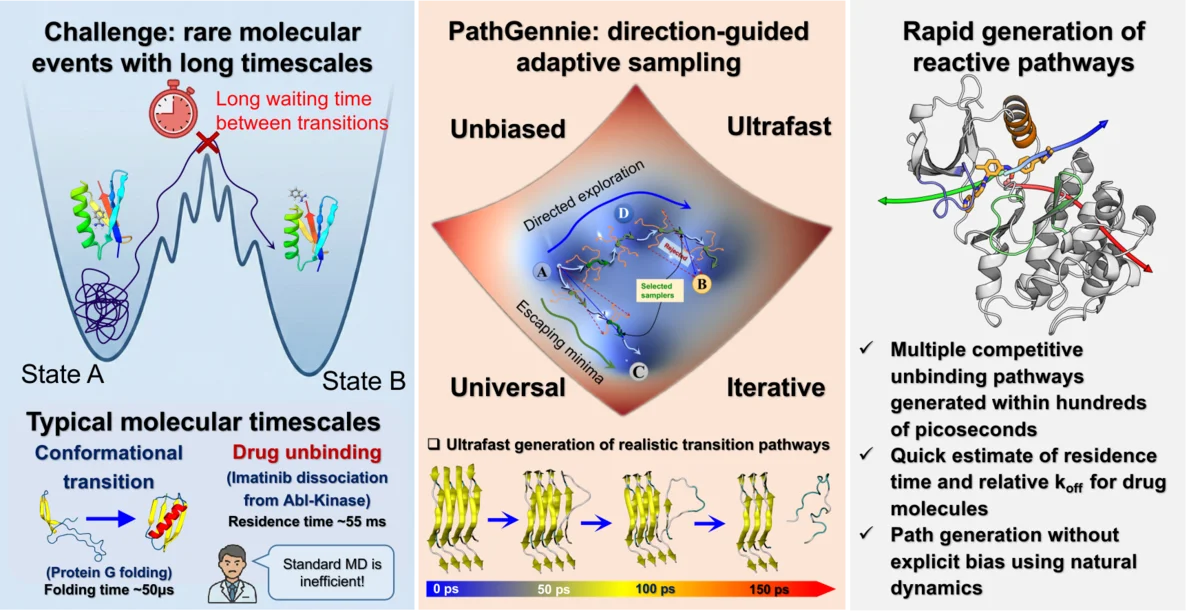
Direction-guided adaptive sampling for rare-event transition pathways
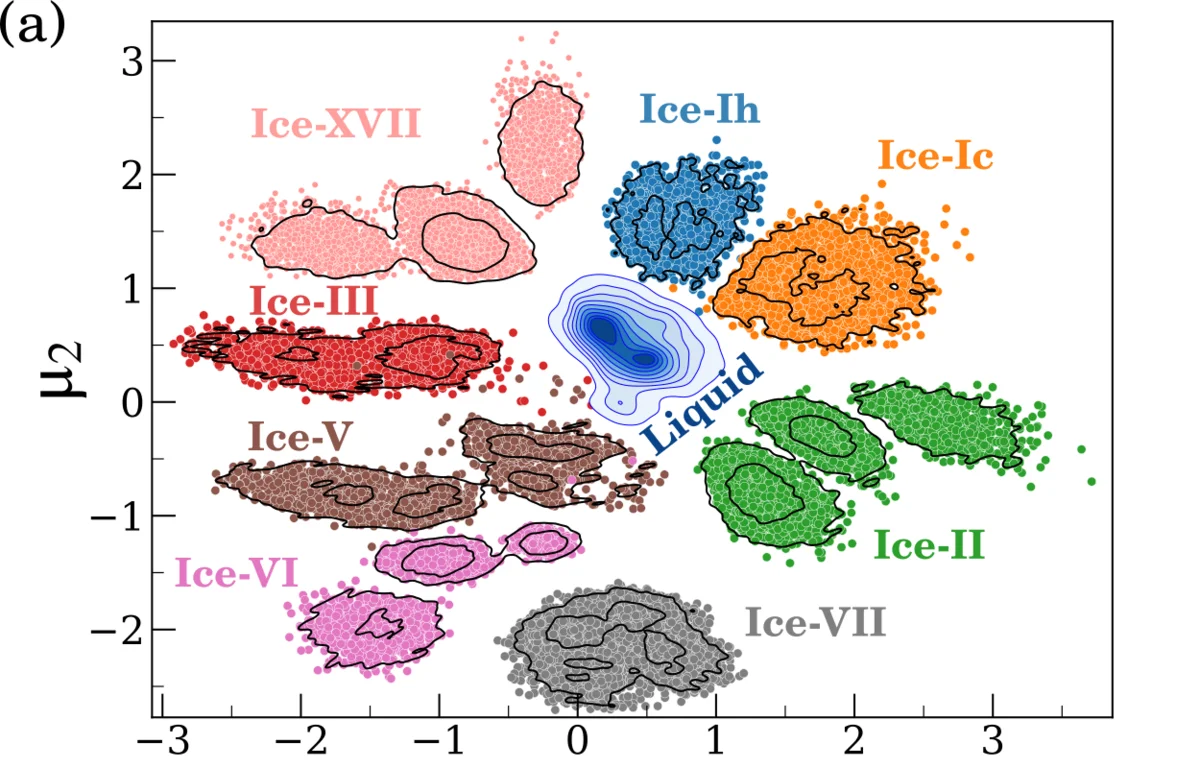
Variational-autoencoder representation learning for ice-phase identification
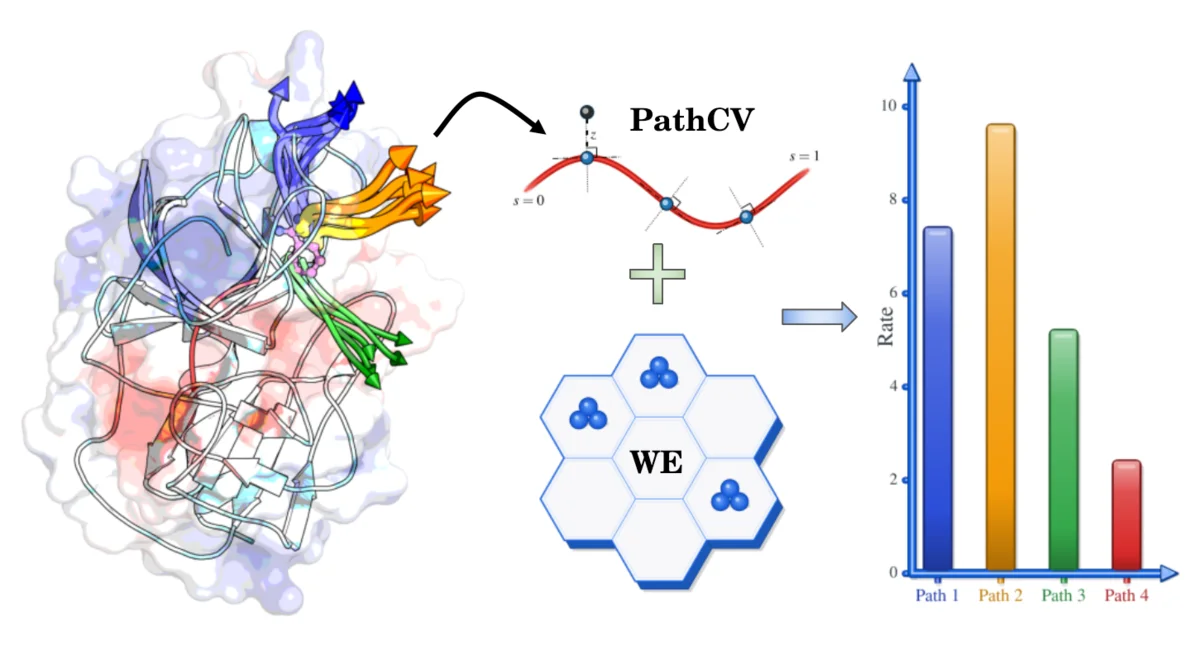
Neural-network-guided weighted-ensemble simulations for channel-specific rates
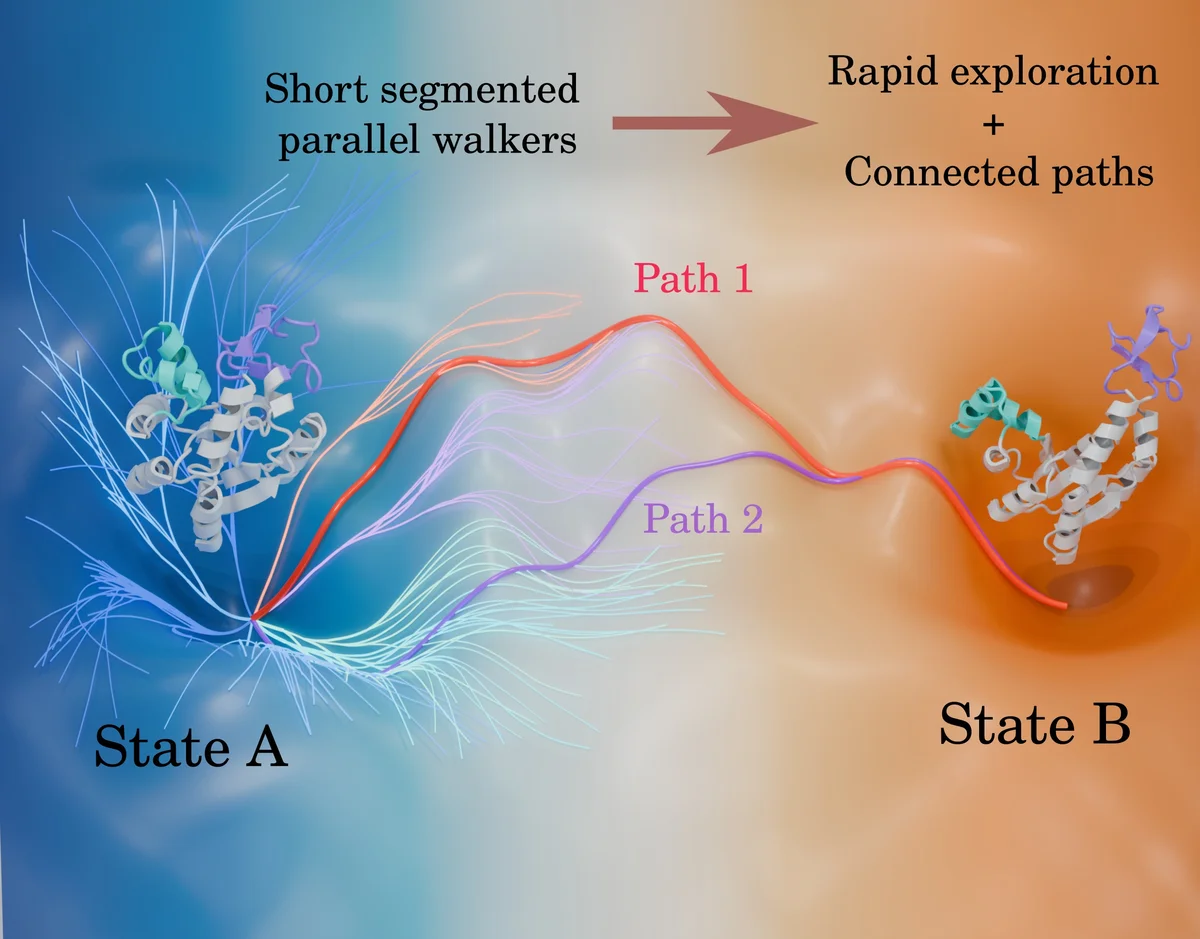
Lineage-aware adaptive molecular-dynamics framework